

Spring Coastal Walks on Exmoor — Cliffs, Coves & Countryside
Discover the most spectacular coastal walking routes on Exmoor this spring — from towering sea cliffs to hidden harbours. Book a cottage near the coast and explore on foot.
Browse Cottages →Image Credit: Nigel Stone
Your Guide to Exmoor’s Best Coastal Walks
1. Valley of the Rocks, Lynton
Just a mile west of Lynton, the Valley of the Rocks is one of Exmoor’s most iconic landscapes. This spectacular dry valley runs parallel to the coast, lined with dramatic rock formations — Castle Rock, Rugged Jack, and the Devil’s Cheesewring — that have been sculpted by millennia of weathering. A herd of feral goats roams the crags, and in spring the clifftops are carpeted with thrift and sea campion.
The circular walk follows the coast path west from the car park, offering stunning views across the Bristol Channel to Wales. You’ll pass the dramatic cliff edge before looping inland through the valley itself. In April and May, look out for razorbills and guillemots on the rock ledges, and listen for the song of stonechats along the gorse-lined path.
For a longer option, extend the walk east along the coast path to Lynmouth, descending through woodland to the harbour. You can return via the famous cliff railway — a water-powered funicular that has been connecting Lynton and Lynmouth since 1890.
Stay Near Lynton & Lynmouth


2. Porlock Weir to Bossington Beach
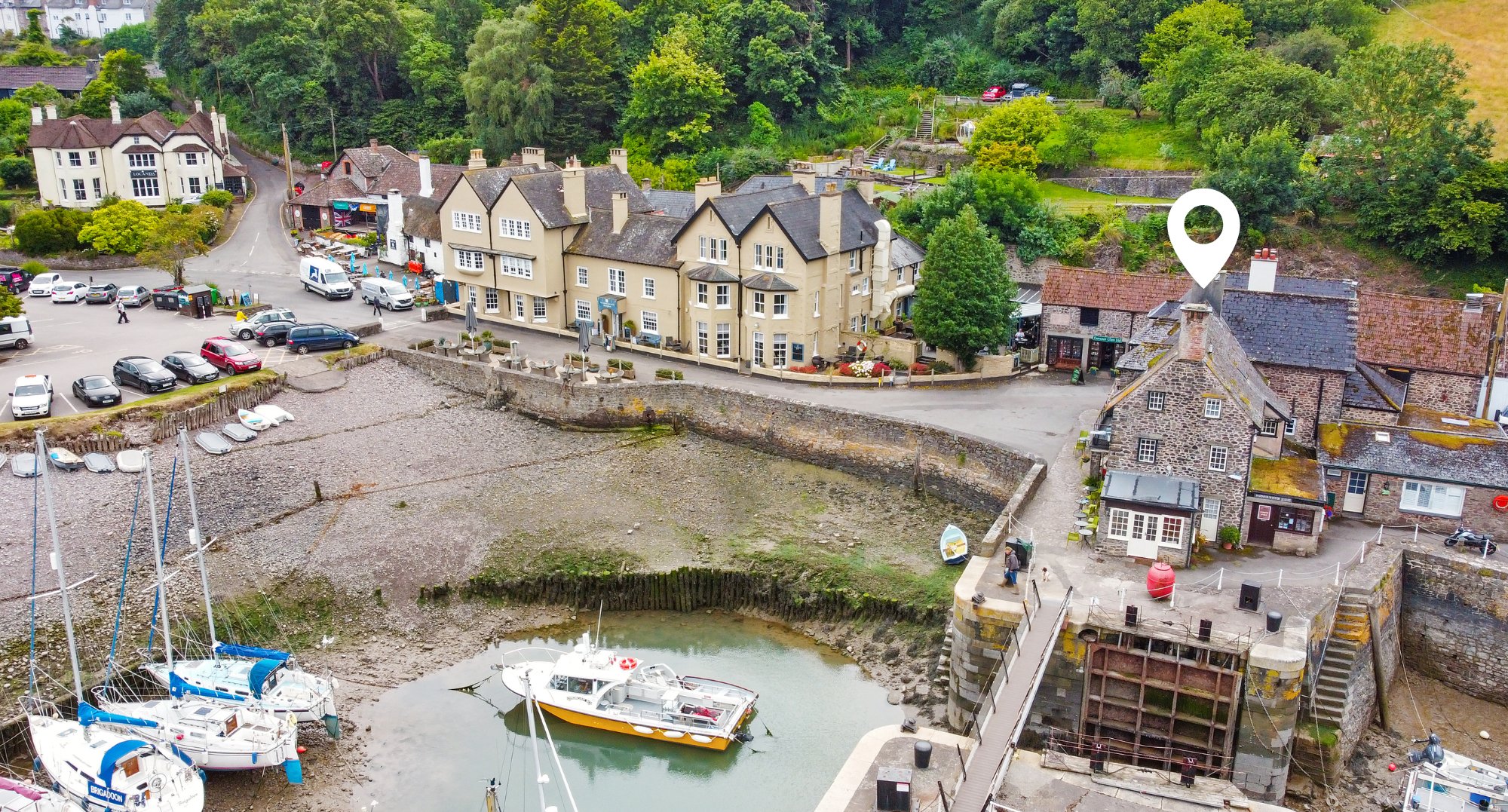
This gentle, largely flat walk links two of Exmoor’s most charming coastal spots. Starting from the medieval harbour at Porlock Weir — where a handful of pubs and tea rooms cluster around a pebble beach — the route follows the coast path east along the shingle ridge that separates Porlock Marsh from the sea.
Porlock Marsh is one of the most important coastal wetlands in the South West. In spring, the marshes come alive with wading birds, and you may spot curlew, redshank, and shelduck feeding in the pools. The pebble ridge was breached by storms in 1996, creating a rare saltmarsh habitat that is gradually being reclaimed by the sea — a fascinating example of managed retreat.
The walk ends at Bossington Beach, a dramatic sweep of pebbles beneath the wooded slopes of Bossington Hill. From here, you can either retrace your steps or take the circular route back through Bossington village and along the lanes through Porlock Vale, passing through ancient oak woodland and farmland dotted with spring lambs.
Stay in Porlock Weir

3. Countisbury to Foreland Point
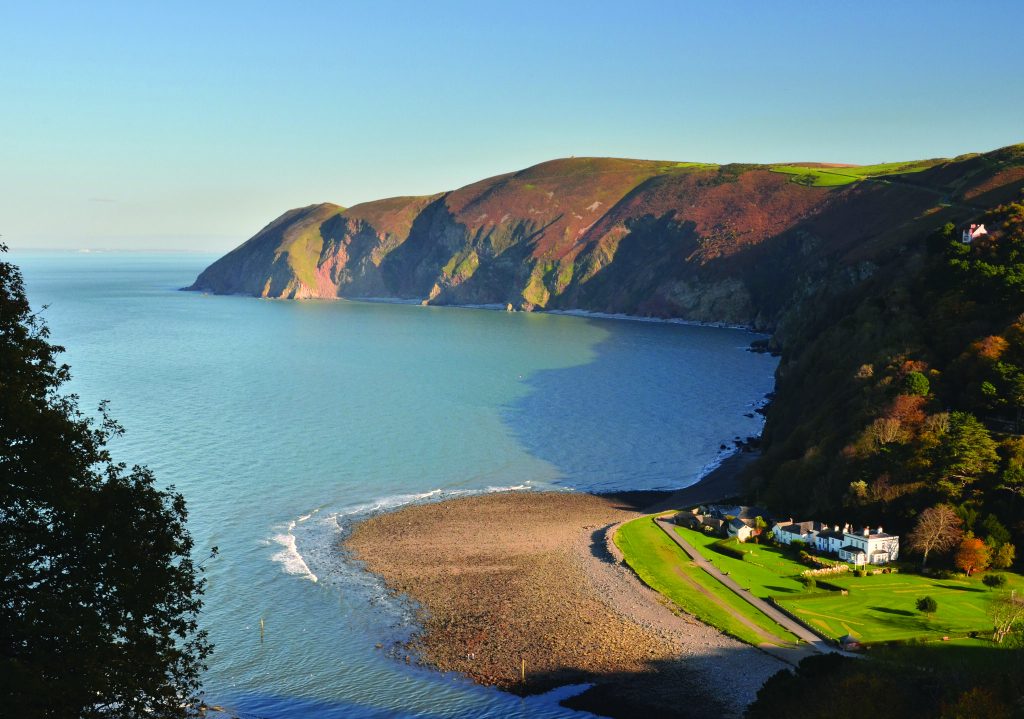
This walk takes you along some of the highest sea cliffs in England. From the tiny village of Countisbury — perched 300 metres above Lynmouth — the coast path heads east along the cliff edge towards Foreland Point, the most northerly point on the Exmoor coast. The views are simply staggering: on clear days, you can see across the Bristol Channel to the Welsh coast and the Brecon Beacons beyond.
Foreland Point is home to a lighthouse that has guided ships through the treacherous Bristol Channel since 1900. The descent to the lighthouse is steep but rewarding, and the exposed headland is a superb spot for watching seabirds — gannets, kittiwakes, and peregrine falcons are all regularly seen here in spring. On calm days, keep an eye on the water below for porpoises and grey seals.
The return route climbs back through Countisbury, where the Blue Ball Inn offers well-deserved refreshments. This is exposed walking with some steep sections, so good boots and waterproofs are essential even in spring.
Stay in Countisbury

4. Heddon Valley to Heddon’s Mouth
This is one of the most accessible and family-friendly coastal walks on Exmoor. Starting from the National Trust’s Hunter’s Inn — a beautifully situated pub in a deep wooded valley — the path follows the River Heddon downstream through ancient oak woodland to where it meets the sea at Heddon’s Mouth.
The walk is relatively flat and sheltered, making it a perfect choice on breezy spring days when the exposed clifftops might be uncomfortable. The woodland is at its best in late April and May, when the oak canopy is fresh green and the woodland floor is dotted with bluebells, wood anemones, and wild garlic. Dippers and grey wagtails dart along the river, and you may spot a sparrowhawk hunting through the trees.
At Heddon’s Mouth, a dramatic wall of pebbles meets the sea between towering cliffs. The remains of a Victorian lime kiln stand on the beach — lime was shipped in by boat and burned here to spread on the acidic moorland soils. For a more challenging walk, extend along the coast path west towards Woody Bay, following one of the most spectacular sections of the South West Coast Path.
Stay Near Heddon Valley


5. Minehead to Selworthy Beacon
This walk begins at the very start of the South West Coast Path — marked by a sculpture on Minehead seafront — and climbs steadily through woodland and open hillside to Selworthy Beacon, one of the finest viewpoints on the Exmoor coast. At 308 metres above sea level, the beacon offers panoramic views across Porlock Bay, the Bristol Channel, and deep into the heart of Exmoor.
The ascent follows the coast path westward from Minehead, climbing through North Hill and out onto open moorland. In spring, the hillsides are covered in heather and gorse, and the coastal scrub buzzes with newly arrived migrant warblers — whitethroats, willow warblers, and the occasional cuckoo. The summit cairn at Selworthy Beacon is a wonderful spot for a picnic, with views stretching from Dunkery Beacon to the Welsh coast.
The return route drops down through the National Trust village of Selworthy, one of the prettiest villages in Somerset, with its thatched white cottages and 15th-century church. From there, quiet lanes lead back through Allerford — where you can cross the famous medieval packhorse bridge — and back to Minehead.
Stay in Minehead


Frequently Asked Questions
Ready to Walk the Exmoor Coast?
Browse our collection of hand-picked holiday cottages along the Exmoor coast — from cosy retreats for two to spacious family homes. All exclusively managed by our local team.
Browse All Cottages →