☰
The Dunster & Bat’s Castle Circular Walk — Exmoor’s Six-Mile Castle, Coin Hoard & Tall Trees Classic
A medieval market town, an Iron Age hillfort, England’s tallest tree and a 13th-century packhorse bridge — all on one beautifully waymarked Exmoor day walk. Stay in a handpicked cottage right on the route.
Browse Cottages →
The Dunster & Bat’s Castle Circular Walk is one of Exmoor’s most satisfying half-day circuits — a 10.4 km (6½-mile) loop that climbs out of the medieval market town of Dunster onto the high ground of Bat’s Castle Iron Age fort, drops to Broadwood Farm, then returns through the cathedral-quiet woodland of the Tall Trees Trail and over the 13th-century packhorse bridge at Gallox.
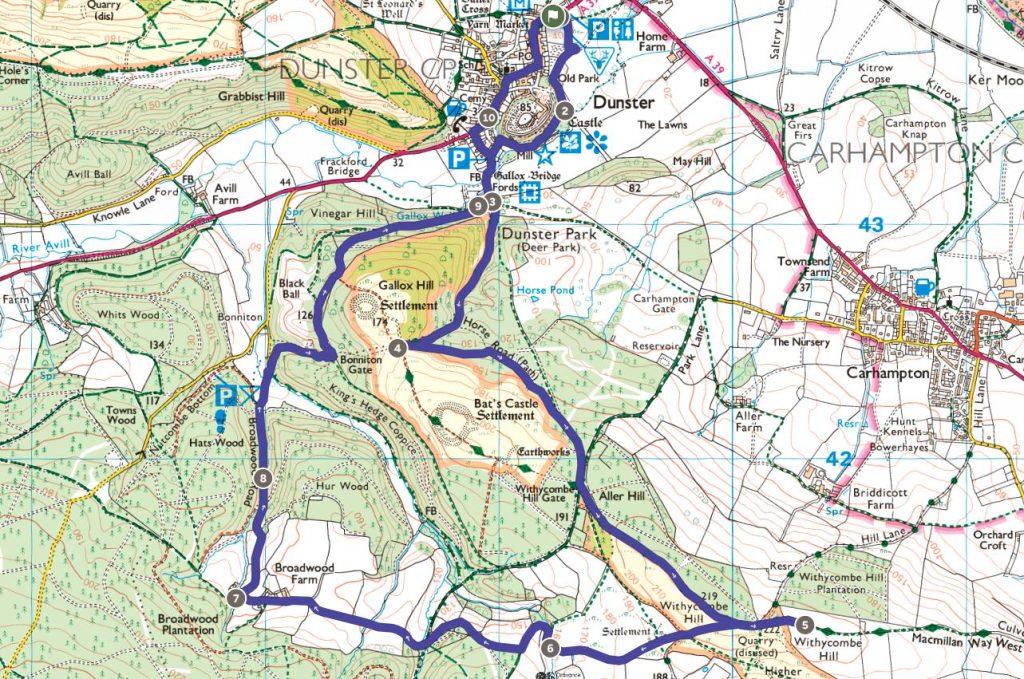
Officially route No. 5 in the Exmoor Classics series, the Dunster & Bat’s Castle Circular Walk starts at Dunster Steep car park, takes you uphill past the castle grounds and over Gallox Bridge, then climbs steadily through Bat’s Castle to Black Hill and Broadwood Farm. From there, the path drops to Nutcombe Bottom and joins the Tall Trees Trail, before crossing Gallox Bridge again and finishing through Mill Gardens and up the High Street past the Yarn Market.
At 10.4 km (about six and a half miles) with 362 metres of ascent, this is a comfortable three-to-four-hour walk that packs a Saxon market town, an Iron Age hillfort, the tallest tree in England, a National Trust castle and a medieval packhorse bridge into a single loop. Consequently, it ranks among the most popular routes in the Exmoor Classics series.
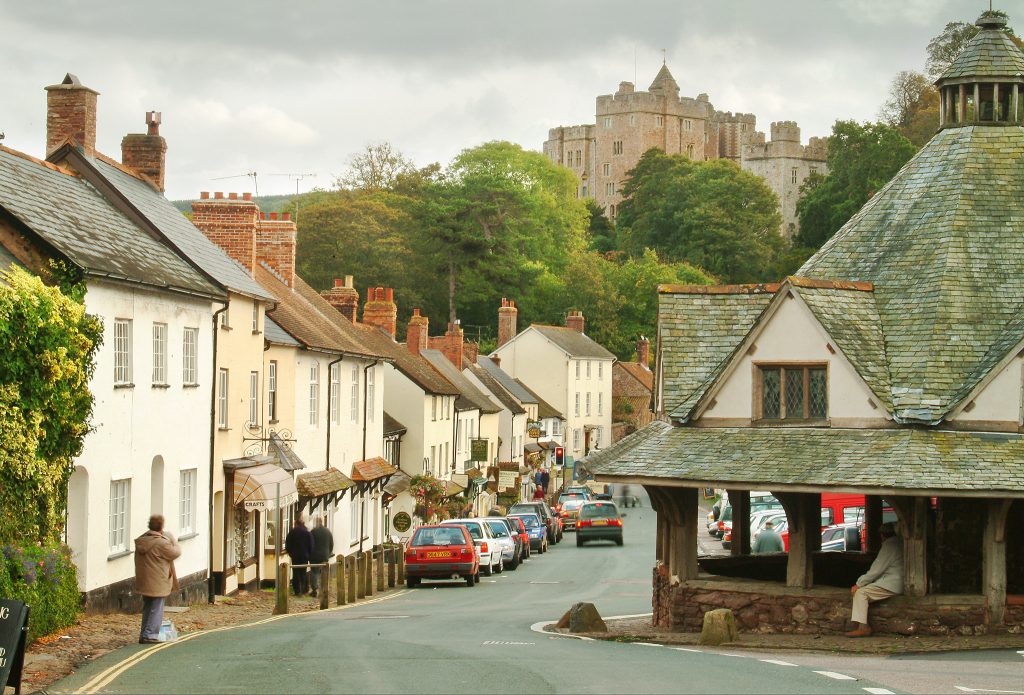
Image Credit: Neville Stanikk
The Dunster & Bat’s Castle Circular Walk in This Guide
1. Quick Facts About the Dunster Circular Walk
- Distance: 10.4 km (about six and a half miles)
- Total ascent: 362 metres (1,188 feet)
- Duration: About three to four hours of walking time
- Difficulty: Moderate — one sustained climb up to Bat’s Castle, otherwise gentle woodland tracks and quiet lanes
- Start / end: Dunster Steep Pay & Display Car Park
- Postcode: TA24 6AS · Grid: SS 993 439 · what3words: drums.yachting.already
- Terrain: Woodland tracks, open hilltop, field paths and short sections of quiet lane
- Dog-friendly: Yes — keep dogs on a lead near livestock, deer and ground-nesting birds
- Toilets: At the start in Dunster Steep car park
- Refreshments: Shops, cafes and pubs in Dunster village (passed at the start and end of the walk)
2. Dunster Circular Walk Route Directions
Ten waypoints take you round the full Dunster & Bat’s Castle Circular Walk. First, you climb out of Dunster past the castle grounds. Then you cross Gallox Bridge and head up to the Iron Age hillfort of Bat’s Castle, drop down to Broadwood Farm and Nutcombe Bottom, and finally return through the Tall Trees Trail and along Dunster High Street.
Stage 1 — Dunster Steep to the Castle Grounds
First, leave the car park through a wooden kissing gate opposite the toilets. Walk uphill, signposted Gallox Bridge. The path takes you up a tarmac drive through the Old Park entrance to the castle, past a permitted footpath sign. Continue along the boundary of the castle grounds, with the perimeter wall on your left, until you reach a metal kissing gate. Then turn left and head down towards the River Avill.
Stage 2 — Lawns Bridge & the Castle Perimeter
Next, go through the gate and follow the path as it crosses Lawns Bridge and runs around the southern perimeter of the castle grounds. The path eventually emerges by the side of a meadow and continues down towards Gallox Bridge.
Stage 3 — Gallox Bridge to Bat’s Castle
On reaching Gallox Bridge, turn left along a stony track signposted Bat’s Castle / Carhampton. Pass a row of thatched cottages and then, at a junction of paths, turn right through a gate signposted Footpath Withycombe Hill ¼. Once through the gate, turn right and follow the path uphill, signposted Permitted Footpath Bat’s Castle. The path climbs steadily through woodland onto a track. Ignore two paths joining from the left and continue ahead at a second signpost marked. Eventually, you emerge from the woodland onto a track. Turn left along this track, signposted MAC Bat’s Castle ¼, and continue to climb. The track becomes a wide grassy path as it heads uphill towards the hillfort, with sweeping views of the Quantocks opening up on your left.
Stage 4 — Bat’s Castle Hillfort to Black Hill
Continue through Bat’s Castle — an Iron Age fort enclosed by a rampart and ditch with a strong counterscarp bank, set roughly 140 metres above the sea. Then retrace your steps to the second junction and head downhill on a track signposted Hill Lane / Black Hill 1. At a signpost marked Public Bridleway, go through a gate on the right and into a field. Head downhill, staying close to the field boundary on the left and passing three gates. Finally, at a metal gate (grid SS 992 412), continue ahead signposted Bridleway Black Hill, cross a stream and head uphill on a stony track.
Stage 5 — Black Hill to Broadwood Farm
Where the track reaches woodland, turn right and follow the footpath signposted Broadwood Farm ¾. When the path joins a track, continue right as indicated by a yellow-tipped fingerpost marked Footpath. On reaching a junction of five paths, follow the footpath signposted Broadwood Farm. Continue through a kissing gate and across two fields. Pass through a gate in the right-hand corner and turn left, signposted Broadwood Farm, staying close to the boundary on the right. As you pass the farm, go through two gates and continue downhill along the lane.
Stage 6 — Broadwood Lane to the Water Treatment Centre
As the lane below Broadwood Farm bends round to the right, take the path on the left, signposted Public Footpath Water Treatment Centre ¼. After passing the gate, follow yellow-topped posts. Importantly, the ground here becomes a little wet and boggy in places, but wooden planks have been laid to enable you to avoid the worst of it. The path joins a wider track and heads downhill, signposted Footpath Nutcombe ¼, eventually reaching the road that runs down to Broadwood.
Stage 7 — The Tall Trees Trail
Turn left down the road and then bear right onto a path signposted Public Footpath the Tall Trees Trail. This wide woodland path runs through Nutcombe Bottom and is famous for its towering Douglas firs — including the tallest tree ever measured in England. Follow the trail as it climbs gently through the woods. Eventually, you re-join the junction of footpaths you crossed earlier in Stage 3.
Stage 8 — Gallox Bridge & Mill Gardens
Continue ahead, pass the thatched cottages and cross Gallox Bridge for the second time. Then turn right past the car park entrance and through Mill Gardens. Continue along Mill Lane and, at a junction known as Bonniton Gate, turn left. This wide path meanders uphill into Dunster.
Stage 9 — Castle Hill & Dunster Yarn Market
Stay on the right-hand side of the road and, at the traffic lights, turn right and walk uphill towards the castle entrance via Castle Hill. At the entrance to the castle, turn left and walk downhill towards the High Street. Continue along the High Street, passing the iconic 17th-century Yarn Market on your left.
Stage 10 — Yarn Market Back to Dunster Steep
Follow the road as it bears round to the right past the Exmoor National Park Centre, and return to the car park at Dunster Steep to complete the Dunster & Bat’s Castle Circular Walk.
3. Highlights Along the Dunster Circular Walk
Dunster Village & Yarn Market
Dunster is one of the best-preserved medieval villages in England. The cobbled High Street is dominated by the octagonal Yarn Market, built around 1609 by George Luttrell for the sale of locally-woven cloth. Furthermore, the village retains its medieval grid, a working watermill and a 12th-century priory church.
Dunster Castle
Sitting on a tor above the village, Dunster Castle has been continuously occupied since the Norman Conquest. The route skirts the castle grounds twice — once on the climb out of Old Park, and once at the very end of the walk by Castle Hill. Now owned by the National Trust, the castle and its terraced gardens (with their famous lemon trees) are well worth a separate visit if you have time.
Gallox Bridge
You cross Gallox Bridge twice on this walk — a medieval double-arched packhorse bridge over the River Avill, dating from around the 15th century. The name comes from the gallows that were sited at the nearby crossing of tracks: condemned felons were marched out of Dunster to be hanged here, in full view of the road into town.
Bat’s Castle Iron Age Hillfort
Bat’s Castle is one of the larger Iron Age forts on Exmoor. The fort measures roughly 140 metres by 100 metres, enclosed by a rampart and ditch with a strong counterscarp bank. Outlying ditches to the south-east of the fort may have been used as a camp during the English Civil War (1642–1651). Importantly, in 1983 two schoolboys discovered a hoard of eight coins from 102 BC to 350 AD on the ramparts — one of the most significant Iron Age finds on the Exmoor coast.
The Tall Trees Trail & England’s Tallest Tree
The return leg of the walk takes you through the Tall Trees Trail at Nutcombe Bottom, where the Forestry Commission planted a stand of Douglas firs in the 1870s. Notably, when measured in 2009, one of these trees was found to be 60.05 metres tall — reputed to be the tallest tree in England. Native to North America, Douglas firs were first brought to the UK in 1827 by the botanist David Douglas. They thrive in the western areas of Britain, where rainfall is higher.
Bonniton Gate & Mill Gardens
As the walk returns to Dunster, you pass through Mill Gardens and the junction known as Bonniton Gate — named after the gallows on the hill above. The Mill itself, a working watermill still grinding Exmoor flour, is one of the village’s most photographed corners.
Stay in Dunster
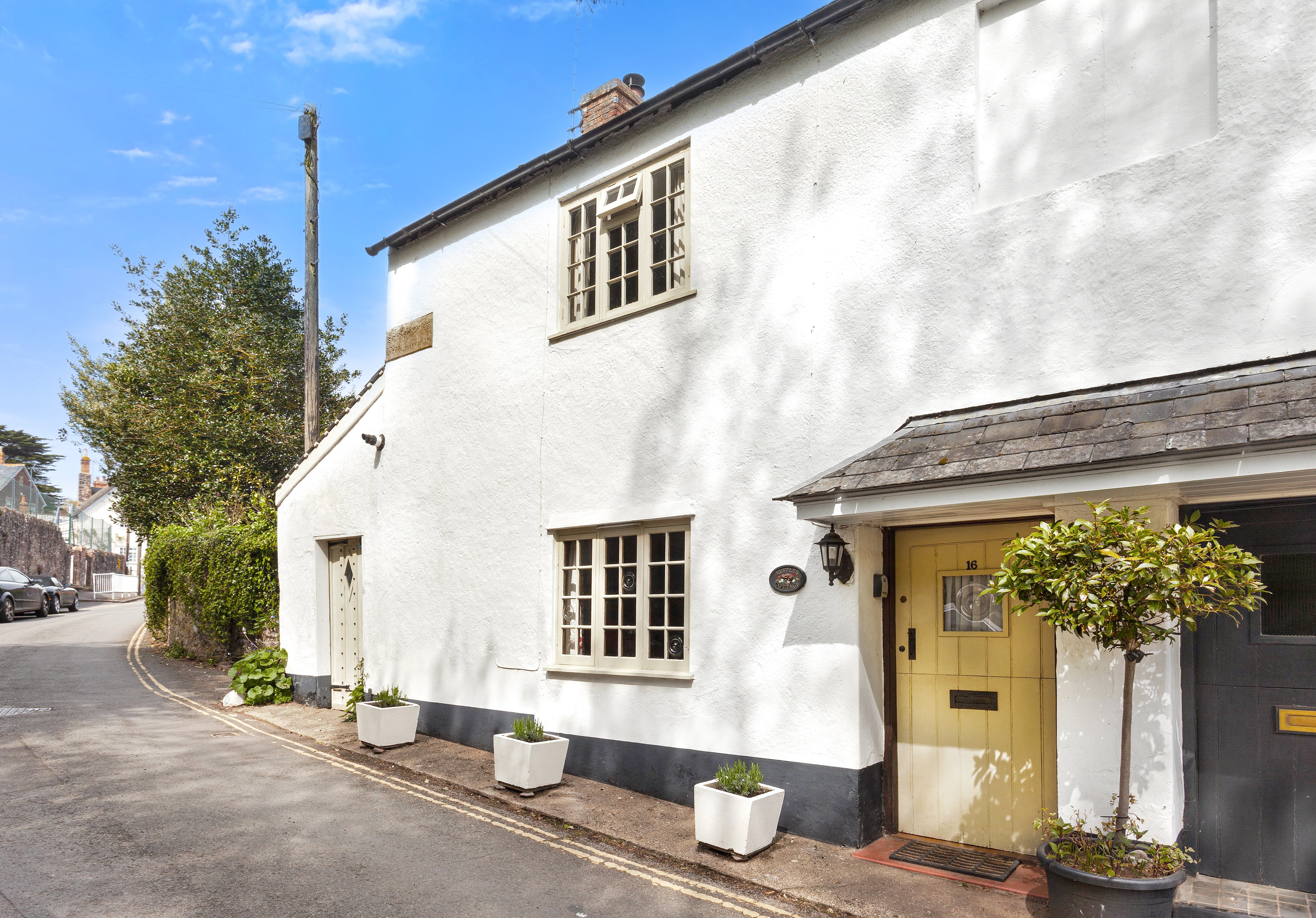
Ruffles Cottage, Dunster
Sleeps 4 · 2 Bedrooms
Book
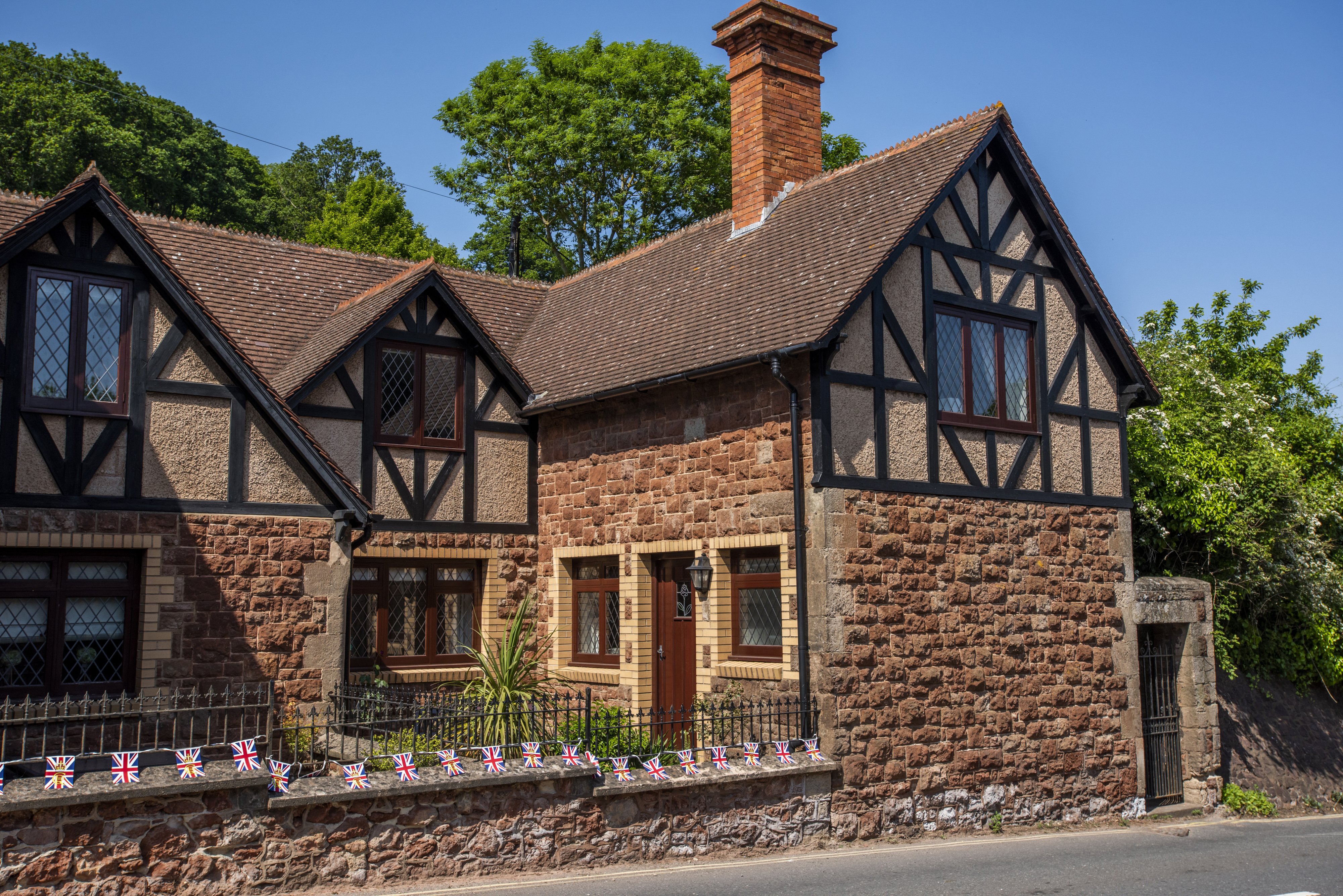
Two Grooms Cottage, Dunster
Sleeps 6 · 3 Bedrooms
Book

Grist Mill, Dunster
Sleeps 8 · 4 Bedrooms
Book
4. History & Heritage on the Dunster Circular Walk
Saxon Beginnings & the Mohun Family
There was a Saxon presence in Dunster from around 700 BC, and the name itself derives from “Dunna’s Tor” — one of the first Saxon thanes, who is thought to have built a timber fortress on the central hill or tor where Dunster Castle now stands. Following the Norman Conquest, the manor and other lands were granted to William de Mohun. The Mohun family then built a stone castle of the motte-and-bailey type, and oversaw the development of Dunster as a market town and busy fishing and trading port.
The Luttrell Family & the Civil War Siege
The castle was sold by the Mohuns to the Luttrell family in 1405. They retained ownership for nearly 570 years, in which time the castle was rebuilt twice (1867 and 1872) and remodelled by George Fownes Luttrell. Notably, the castle featured in the English Civil War (1642–1651), when it was held by the Parliamentarians. Following a six-month siege in June 1645, the castle was retaken by the Parliamentarians, before being seized by the Royalists in 1642, when the future King Charles II spent two weeks at the castle as a young prince. Finally, the castle was given to the National Trust in 1976.
The Bat’s Castle Coin Hoard
Bat’s Castle is one of the larger Iron Age hillforts on Exmoor, occupied between approximately 102 BC and 350 AD. The centre of the fort measures roughly 140 metres by 100 metres, enclosed by a rampart and ditch. Most famously, in 1983 two schoolboys playing on the ramparts uncovered a hoard of eight coins, dating from the late Iron Age and early Roman occupation. The find is one of the most significant on Exmoor and is now held by the local museum.
Douglas Firs & the Tall Trees Trail
The Forestry Commission planted Douglas firs at Nutcombe Bottom in the 1870s. When measured in 2009, the tallest of these trees stood at 60.05 metres — reputed to be the tallest tree in England. Indeed, the species was named in 1827 by the Scottish botanist David Douglas, after he found exceptional specimens in North America. The Tall Trees Trail forms one of the loveliest stretches of woodland on the whole walk, and a presentation box at the start of the route explains the history of the trees and the trail.
The Exmoor Classics Series
The Dunster & Bat’s Castle Circular Walk is route No. 5 in the
Exmoor Classics, the Exmoor National Park’s series of twelve longer waymarked walks. Other routes include Bossington Hill, Combe Martin & Great Hangman, Countisbury, Valley of Rocks, and Winsford & the Punchbowl. Leaflets are available from National Park Centres at Dunster, Dulverton and Lynmouth, or as digital maps from
exmoorwalks.org. For more walking inspiration, see our
full collection of Exmoor circular walks.
Stay in Timberscombe, Carhampton & Wootton Courtenay

East Harwood Farm Cottage, Timberscombe
Sleeps 4 · 2 Bedrooms
Book

Bossington Cottage, Near Dunster
Sleeps 4 · 2 Bedrooms
Book
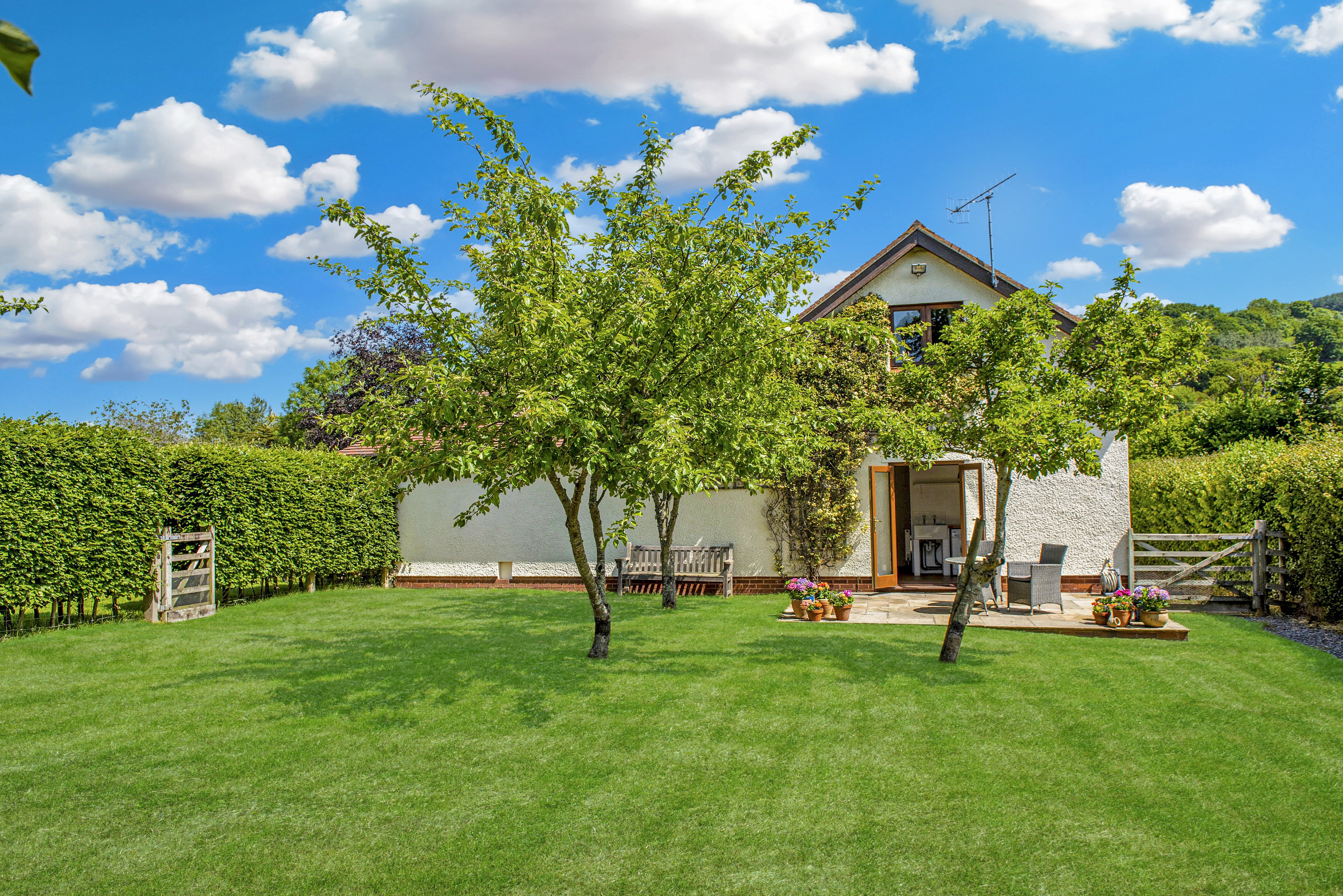
Dunkery View, Wootton Courtenay
Sleeps 2 · 1 Bedroom
Book
5. Practical Information for the Dunster & Bat’s Castle Circular Walk
Getting There & Parking
The Dunster & Bat’s Castle Circular Walk starts and ends at Dunster Steep Car Park (Pay & Display), at the southern end of the village just off the A396. The postcode is TA24 6AS, grid SS 993 439, what3words drums.yachting.already. Additionally, there are public toilets at the car park, and the Exmoor National Park Centre is a two-minute walk away in the village.
Refreshments on the Route
All the refreshment options are clustered at the start and end of the walk in Dunster village. Highlights include the
Stags Head Inn, the
Luttrell Arms,
Reeves Restaurant and a clutch of independent cafes and tearooms on the High Street. Importantly, there are no facilities on the moorland section between Bat’s Castle and the Tall Trees Trail, so carry water and snacks for the middle of the walk. For more options, see our
guide to the best pubs on Exmoor.
Dogs on the Dunster & Bat’s Castle Walk
Dogs are welcome on this walk. However, please keep them under close control at all times — especially through the fields between Bat’s Castle and Broadwood Farm, where you’ll meet sheep, cattle and the occasional red deer. If you feel threatened by cattle, drop the lead and move away, particularly when they are protecting their calves. Additionally, the woodland around the Tall Trees Trail is home to ground-nesting birds in spring. Finally, bag any waste and take it with you until you reach a dog bin.
What to Wear
- Footwear: Walking boots or sturdy trail shoes — the climb to Bat’s Castle is steep and the Broadwood field paths can be muddy after rain
- Layers: The hilltop section is exposed — bring a windproof layer even on warm days
- Waterproofs: Weather on Exmoor can change quickly
- Map: OS Explorer OL9 (Exmoor) or the Exmoor Classics No. 5 leaflet, available from National Park Centres
Waymarking
First, the outward route follows fingerposts towards Gallox Bridge, Bat’s Castle and Carhampton. Then the central section is signposted on yellow-tipped Footpath posts via Broadwood Farm and Nutcombe. Finally, the return follows the Tall Trees Trail back into Dunster. Importantly, all rights of way on Exmoor use handmade fingerposts — footpaths are marked with a yellow tip, bridleways with a blue tip.
Safety Note
The climb out of Dunster to Bat’s Castle is steady but sustained — 362 metres of total ascent over a relatively short distance. Therefore, take your time on the woodland tracks above Gallox Bridge, especially after rain when the leaf-mould underfoot can be slippery. Furthermore, the field section between Black Hill and Broadwood Farm can be very wet in winter; wooden planks have been laid in the boggiest places, but waterproof footwear is essential outside of high summer.
6. Where to Stay near the Dunster & Bat’s Castle Circular Walk
The Dunster & Bat’s Castle Circular Walk passes within a stone’s throw of some of Exmoor’s most beautiful villages — Dunster itself, Carhampton, Timberscombe and Wootton Courtenay. Below are three more handpicked cottages on or beside the route, from a one-bed bolt-hole right by Mill Gardens to a six-sleeper in the heart of the village. Additionally, you can browse our
guide to the Dunster Winter Festival if you want to combine your walk with the village’s famous Christmas lights, or our
Exmoor map and area guide for the bigger picture.
More Cottages near the Dunster & Bat’s Castle Circular Walk

Pebble Cottage, Dunster
Sleeps 4 · 2 Bedrooms
Book
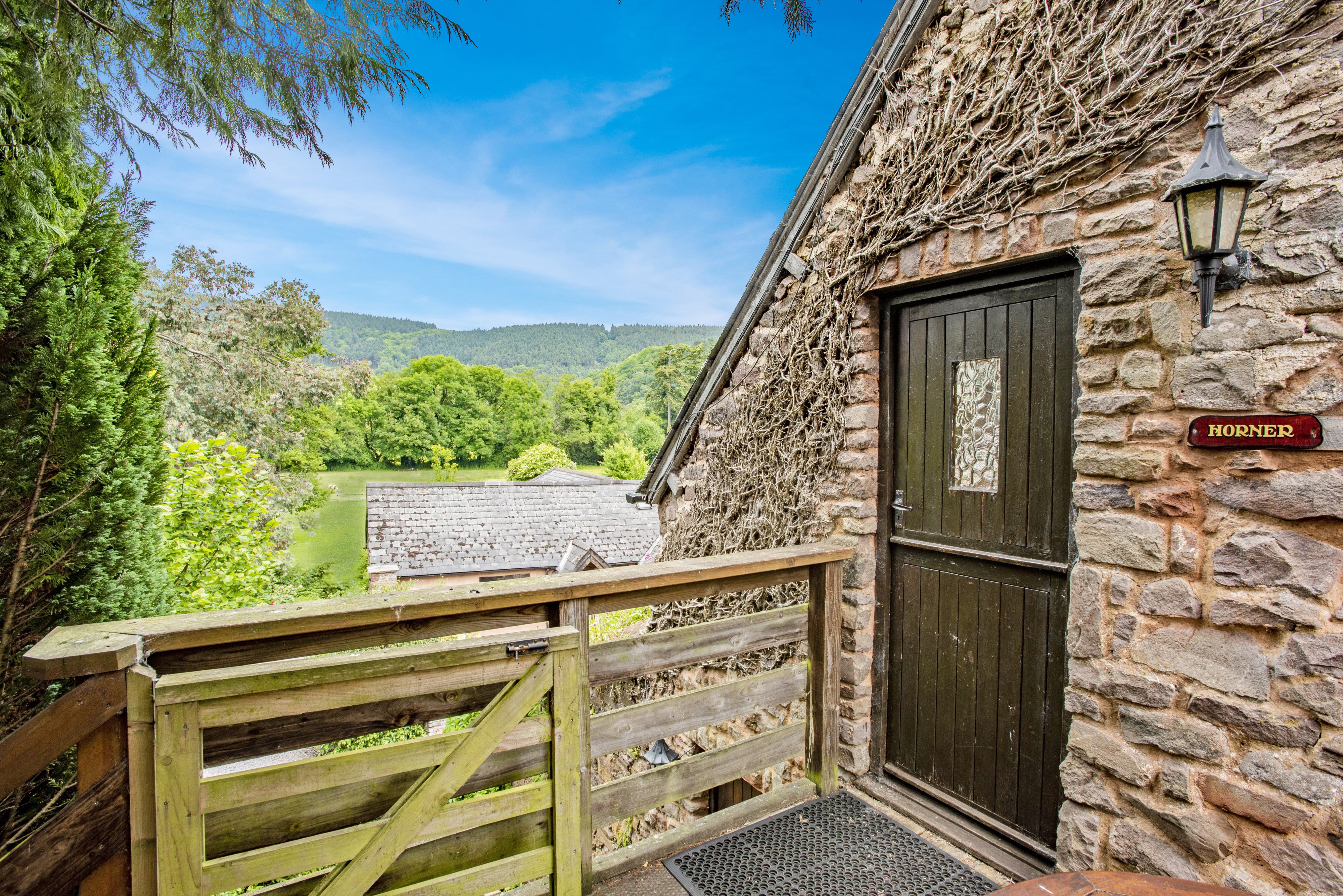
Horner Apartment, Near Dunster
Sleeps 2 · 1 Bedroom
Book

One Grooms Cottage, Dunster
Sleeps 6 · 3 Bedrooms
Book
Frequently Asked Questions
How long does the Dunster & Bat’s Castle Circular Walk take?
Typically, allow three to four hours of walking time for the full 10.4 km (6½-mile) loop, plus extra for a leisurely lunch in Dunster village at the start or end. Most walkers complete the route in around five hours including stops.
How difficult is the Dunster & Bat’s Castle Circular Walk?
Overall, this is a moderate walk. Specifically, there’s 362 metres (1,188 feet) of total ascent, with one sustained climb out of Gallox Bridge up to Bat’s Castle. Apart from that, the gradients are gentle and the paths are well-waymarked, making this a great choice for fit families and confident walkers alike.
Where do I park for the Dunster & Bat’s Castle Circular Walk?
Park at Dunster Steep Pay & Display car park (postcode TA24 6AS, grid SS 993 439). The walk leaves from the wooden gate opposite the toilets. Additionally, the Exmoor National Park Centre is a two-minute walk away — a useful stop for the latest leaflets and route updates.
Is the tallest tree in England really on this walk?
Yes — the Tall Trees Trail at Nutcombe Bottom is home to a stand of Douglas firs planted in the 1870s. Importantly, the tallest of these was measured at 60.05 metres in 2009, making it reputed to be the tallest tree in England. You’ll walk straight through the grove on the return leg of the route.
Is the Dunster & Bat’s Castle Walk suitable for dogs?
Yes. However, please keep them under close control — there are sheep, cattle and red deer on the Broadwood Farm section, and ground-nesting birds in the spring. Finally, bag waste and take it with you until you reach a bin.
What is the best time of year for the Dunster & Bat’s Castle Circular Walk?
Generally, late spring through autumn offers the best conditions — longer days, drier paths and the Tall Trees Trail at its most atmospheric. For example, May fills the woodland with bluebells, while October paints the Douglas firs and beech in copper and gold. Importantly, winter is doable in clear weather, but the Broadwood field section can be very wet between November and March.
Ready to Walk the Dunster & Bat’s Castle Circular Walk?
Browse our collection of hand-picked holiday cottages in Dunster, Timberscombe, Carhampton and Wootton Courtenay — all within minutes of one of Exmoor’s finest circular walks.
Browse Cottages →
THE BEST OF EXMOOR
We’re a tiny, passionate team of locals who know and love Exmoor. Our mission is simple: to help you find your perfect holiday while showcasing the best this incredible area has to offer.
© 2026 The Best of Exmoor. All rights reserved.